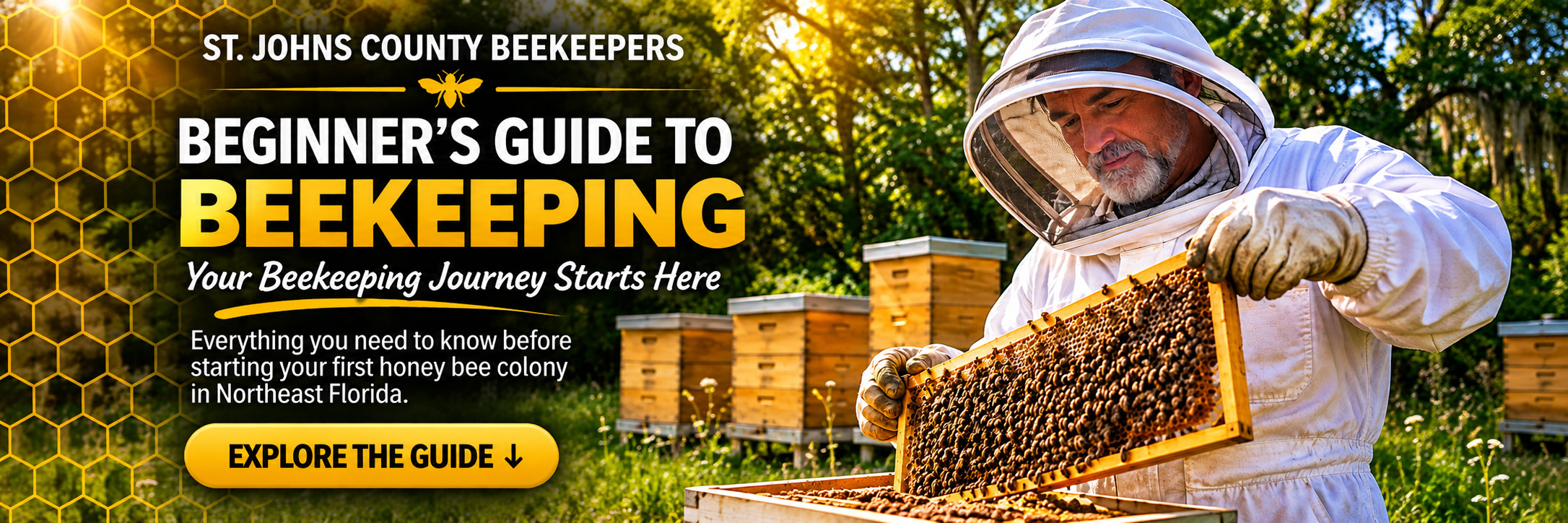
So, You Want to Be a Beekeeper?
Whether you want to strengthen the pollinator population in your neighborhood, harvest your own local honey, or better understand the importance of honey bees to our ecosystem, beekeeping can be an incredibly rewarding experience.
But successful beekeeping requires more than purchasing a hive and a colony of bees. It takes knowledge, preparation, the right equipment, and a commitment to maintaining healthy honey bee colonies.
Before you light your smoker and start opening hives, explore these ten essential topics to help you begin your beekeeping journey in St. Johns County and Northeast Florida.
Knowledge Is Power
Beekeeping is one of those activities where the more you learn, the more you realize there is to discover. Honey bee colonies are constantly changing, and understanding those changes is one of the most important responsibilities of a beekeeper.
Before purchasing your first colony, take time to learn how honey bees live, reproduce, gather resources, and respond to seasonal conditions. A healthy colony depends on a beekeeper who can recognize potential problems and make informed management decisions.
Learn Before You Buy Bees
Northeast Florida offers a unique environment for keeping honey bees. Our relatively mild winters, hot and humid summers, and changing nectar flows mean that local beekeeping practices can differ from those recommended in colder climates.
Understanding the seasonal needs of your colonies will help you prepare for nectar shortages, colony growth, swarming, pests, and other challenges.
Build a Strong Foundation
- Learn the roles of the queen, workers, and drones within a honey bee colony.
- Understand the honey bee life cycle and the stages of brood development.
- Become familiar with common hive equipment and how it is used.
- Learn to recognize healthy brood patterns, stored food, and signs of colony stress.
- Study seasonal colony management in Northeast Florida.
- Understand the importance of monitoring Varroa mites and other honey bee pests.
Books, university extension resources, hands-on instruction, and experienced beekeepers can all contribute to your education. Learning from multiple reliable sources will help you develop sound management practices.
Beekeeping advice is not always universal. Management schedules developed for northern states may not match conditions in St. Johns County. Pay particular attention to local nectar flows, weather patterns, and the extended brood-rearing season common in Florida.
Choosing the Right Hive Location
Selecting the right location for your honey bee colonies is one of the most important decisions you will make when establishing an apiary. A well-planned location benefits both your bees and the people who share the surrounding property.
In St. Johns County, considerations such as summer heat, heavy rainfall, nearby neighbors, and seasonal vegetation all influence where your hives should be placed.
Sunlight and Shade
Morning sunlight is particularly beneficial for a backyard apiary. Positioning your hives where they receive early sunlight can encourage bees to begin their daily activity as temperatures rise.
Avoid placing colonies in areas of constant, heavy shade when a sunnier location is available. Some afternoon shade may be helpful during Northeast Florida's hottest summer months, provided the site has good airflow.
Drainage and Ground Conditions
Florida's seasonal thunderstorms can produce significant rainfall in a short period of time. Choose a well-drained location that does not regularly collect standing water.
Keep hives elevated on stable, level stands and maintain enough clearance to inspect equipment and manage vegetation around the colonies.
Access and Flight Paths
- Allow enough working space behind and beside each hive for safe inspections.
- Avoid directing hive entrances toward frequently used walkways, patios, or doorways.
- Consider fencing or other suitable barriers to encourage bees to gain altitude when leaving the apiary.
- Make sure you can comfortably transport hive equipment to and from the location.
- Provide a dependable water source that bees can access safely throughout the year.
Remember that a full hive can become very heavy. A location that is easy to reach with equipment will make routine management considerably more practical.
Before establishing a backyard apiary, review Florida's honey bee registration requirements through the Florida Department of Agriculture and Consumer Services (FDACS) . Also consider neighborhood restrictions, property boundaries, and the location of neighboring homes when planning your apiary.
Honey Bee Hives, Stands & Setups
Before bringing honey bees home, you will need to decide what type of hive equipment to use and how to establish a safe, manageable apiary. Your equipment choices affect inspections, colony management, honey production, and long-term maintenance.
Several hive designs are used throughout the world. Although each has advantages, beginners should consider equipment availability, ease of inspection, and compatibility with other local beekeepers.
Common Types of Honey Bee Hives
- Langstroth hives: Vertical, modular hives with removable frames. They are widely used in the United States and make routine inspections and equipment replacement relatively straightforward.
- Top bar hives: Horizontal hives in which bees build comb from removable top bars. They require different comb-handling and management techniques than framed hives.
- Warré hives: Vertical hives that typically use smaller boxes and a different management approach. They are less common than Langstroth equipment.
For many first-time beekeepers, standard Langstroth equipment is a practical starting point because replacement components, instructional resources, and experienced help are generally easier to find.
Why Hive Stands Matter
A hive stand keeps equipment elevated above the ground, helping reduce contact with standing water, soil moisture, and surrounding vegetation. It also creates a more comfortable working height during inspections.
Hive stands can be built from treated lumber, concrete blocks, metal supports, or purpose-built equipment. Whatever design you choose, it must remain stable under the weight of a fully populated hive containing brood, bees, and stored honey.
Plan for Florida Conditions
- Choose sturdy stands that can support heavy colonies.
- Keep vegetation trimmed away from hive entrances and stand supports.
- Consider ant management when designing your stands.
- Secure hive equipment against strong winds and severe weather.
- Leave adequate space between colonies for safe inspections.
- Position equipment so that individual boxes can be lifted and removed safely.
Watch & Learn: Hive Stand Protection
This video from the original educational guide demonstrates an additional approach to protecting hive equipment from crawling pests, particularly ants.
Ant protection is one part of good apiary management. A stable stand, proper maintenance, and regular inspections remain essential.
Ants, heavy rainfall, humidity, and strong seasonal winds should all be considered when building hive stands. If you use ant barriers or other pest deterrents, make sure they cannot expose bees to harmful substances. Secure hive components appropriately for local weather conditions.
Essential Beekeeping Tools & Gear
Having the proper equipment makes working with honey bees safer, more efficient, and more enjoyable. While beekeeping suppliers offer an enormous selection of products, beginners only need a relatively small collection of essential tools to get started.
Protective clothing, a smoker, and a dependable hive tool are among the most important items you will use during routine colony inspections.
1. Bee Smokers
A bee smoker is one of the most recognizable tools in beekeeping. Cool smoke helps interfere with the alarm pheromone signals that honey bees use to communicate danger.
A properly operated smoker can make inspections less disruptive to the colony. Common smoker fuels include dry pine straw, untreated wood shavings, and suitable natural burlap.
Smoke should be cool and used sparingly. Excessive smoke can agitate bees and unnecessarily disrupt colony activity.
2. Hive Tools
Honey bees use propolis, a sticky resinous material, to seal openings and secure components inside the hive. As a result, frames and hive boxes can become difficult to separate.
A hive tool allows beekeepers to carefully loosen equipment and remove excess propolis.
- Separate hive boxes during inspections.
- Loosen and lift frames without damaging comb.
- Scrape excess propolis and burr comb.
- Assist with routine equipment maintenance.
3. Beekeeping Suits & Jackets
Protective clothing provides an important barrier between the beekeeper and defensive honey bees. Full suits offer more extensive coverage, while jackets can be convenient for shorter inspections.
Beginners should choose protective clothing that fits properly, provides adequate ventilation, and closes securely around the wrists, ankles, and neck.
4. Protective Veils
A beekeeping veil protects your face, eyes, and neck from bee stings. Because facial stings can be particularly serious, a properly secured veil should be considered essential equipment.
Veils are available in several designs, including round, fencing-style, and hooded versions. Choose one that provides clear visibility and remains comfortably separated from your face.
5. Beekeeping Gloves
Gloves provide additional protection for your hands during hive inspections. Leather beekeeping gloves offer durability, while thinner protective gloves may provide greater dexterity when handling delicate frames.
Some experienced beekeepers work without gloves, but beginners should prioritize protection while developing confidence and proper handling techniques.
What Should Beginners Look For?
Choose protective clothing that allows you to move freely during inspections.
Lightweight, ventilated protective gear can make Florida summer inspections more manageable.
Select tools and equipment that can withstand repeated use and cleaning.
Florida's heat and humidity make protective clothing especially important to consider. Ventilated bee suits and jackets can improve comfort, but hydration, breaks, and avoiding the hottest part of the day are also important. Always handle smokers carefully during dry conditions, and fully extinguish smoker fuel after inspections.
Buying Your First Honey Bees
Once you have selected your hive equipment and prepared your apiary, the next step is purchasing your first honey bee colony. Choosing healthy bees from a knowledgeable supplier can make a significant difference in your first season of beekeeping.
Honey bees are commonly sold as nucleus colonies, packages, or established colonies. Each option has different advantages, costs, and management considerations.
Purchasing a Nucleus Colony
A nucleus colony, commonly called a nuc, is a small, functioning honey bee colony containing a queen, worker bees, brood, and food resources.
Many nucs are sold with five frames, although configurations can vary. Because the colony already contains developing brood and established comb, a nuc can provide beginners with a practical starting point.
Purchasing Package Bees
A package typically contains a measured quantity of worker bees and a separately caged queen. Unlike a nuc, a package does not normally include established brood frames or drawn comb.
Package bees must establish their colony after installation. They may require additional feeding and careful monitoring while the queen is accepted and brood production begins.
Buying an Established Colony
Established colonies may already contain substantial populations, brood, and stored resources. However, larger colonies can be more challenging for inexperienced beekeepers to handle.
Before purchasing an established colony, consider arranging an inspection with an experienced beekeeper to evaluate colony health, equipment condition, and overall manageability.
Questions to Ask Before Buying
- Is the colony headed by a laying queen?
- How many frames of brood and food resources are included?
- Has the colony been evaluated for Varroa mites and signs of disease?
- What type and size of hive equipment will be needed?
- When will the bees be available for pickup?
- What transportation and installation instructions are provided?
Whenever possible, arrange to purchase bees early enough to prepare your equipment and understand the supplier's pickup requirements.
Where to Buy Honey Bees in Northeast Florida
The following contacts are also listed on our Backyard Beekeeping page. Contact suppliers directly to ask about current availability, pricing, colony types, and pickup arrangements.
These contacts are provided for general informational purposes. Listings do not constitute an endorsement or guarantee of availability, product quality, pricing, or services. Buyers should independently verify supplier information before making a purchase.
Spring is often a favorable time to establish new honey bee colonies in Northeast Florida because increasing forage availability can support colony growth. Reserve bees ahead of time, confirm your pickup date, and have your hive equipment assembled before your bees arrive. Always ask your supplier about colony health and recent Varroa mite management.
Inspecting Honey Bee Colonies
Regular colony inspections are one of the most important responsibilities of a beekeeper. By examining the bees, brood, food resources, and overall condition of the hive, you can identify potential problems before they become serious.
Inspections also help you understand how your colony changes throughout the year. A healthy hive in early spring may have very different needs from the same colony during summer or late fall.
Look for Evidence of a Laying Queen
Finding the queen during every inspection is not always necessary. Fresh eggs and young larvae can provide evidence of recent queen activity.
Examine brood frames for a consistent laying pattern. A healthy colony should generally contain brood in multiple stages of development during its active growing season.
Evaluate Brood and Colony Population
Observe the amount of capped brood, open brood, and adult bees occupying the frames. These observations can help determine whether a colony is growing, maintaining its population, or beginning to decline.
Watch for unusual brood patterns, discolored larvae, or other signs that may indicate a health problem requiring further investigation.
Check Food Resources
Honey bees require carbohydrates and protein to support colony development. Inspect frames for stored honey or nectar and pollen.
During periods of limited forage, supplemental feeding may be necessary. Feeding decisions should reflect colony conditions, the season, and whether honey supers intended for harvest are present.
Monitor Colony Growth and Swarming
Strong colonies can expand rapidly during favorable nectar flows. Crowded brood chambers, queen cells, and changing colony behavior may indicate that a colony is preparing to swarm.
Timely inspections help beekeepers decide when to provide additional space or consider appropriate swarm management techniques.
Monitor Varroa Mites
Varroa destructor mites are a major threat to managed honey bee colonies. Visual inspections alone cannot reliably determine mite levels.
Use an appropriate quantitative monitoring method, such as an alcohol wash, to evaluate mite infestation levels and guide management decisions.
Watch & Learn: Inspecting Honey Bee Hives
Watch this beekeeping video to supplement the inspection principles covered in this guide.
As you watch, consider how you would evaluate queen activity, brood development, food resources, and overall colony condition during an inspection.
Honey bee colonies in Northeast Florida may remain active throughout much of the year. During favorable spring conditions, growing colonies often benefit from more frequent inspections. During cooler weather or periods of limited forage, reduce unnecessary disturbance. Plan inspections around suitable weather, colony needs, and your ongoing Varroa monitoring schedule.
Honey Bee Pests & Diseases
Maintaining healthy honey bee colonies requires more than providing a hive and allowing bees to forage. Beekeepers must recognize and manage pests, parasites, and diseases that can weaken or destroy colonies.
In Northeast Florida, warm temperatures and high humidity can create favorable conditions for several common hive pests. Regular inspections, monitoring, and timely management are essential.
Varroa Destructor Mites
Varroa mites are among the most serious threats facing managed honey bee colonies. These external parasites reproduce inside capped brood cells and feed on developing and adult bees.
Varroa mites also transmit harmful viruses, including deformed wing virus. Heavy infestations can reduce colony populations, weaken developing bees, and contribute to colony collapse.
Because mites are often difficult to detect through visual inspection, beekeepers should use reliable monitoring methods such as alcohol washes. Treatment decisions should be based on measured mite levels and current guidance.
Small Hive Beetles
Small hive beetles are particularly important pests in Florida. Adult beetles enter colonies and can reproduce when conditions permit.
Beetle larvae feed on colony resources and can contaminate honey, causing fermentation and damage to comb. Weak colonies and excessive unprotected hive space are especially vulnerable.
Maintaining strong colonies, avoiding unnecessary empty equipment, and using appropriate beetle management techniques can help reduce problems.
American Foulbrood
American foulbrood (AFB) is a serious bacterial disease affecting developing honey bees. It produces persistent spores that can contaminate comb and equipment.
Warning signs may include irregular brood patterns, sunken or perforated cappings, discolored brood remains, and an unusual odor. Not every infected colony displays all of these symptoms.
If American foulbrood is suspected, avoid moving or sharing potentially contaminated equipment. Contact the appropriate state apiary inspection authority for guidance before taking action.
Other Common Hive Pests
- Wax moths: Can damage unattended comb and equipment, especially in weak colonies or stored hive materials.
- Ants: May invade hive stands, feeders, and equipment in search of food.
- Mice and other small animals: Can enter or disturb equipment, particularly when colonies are weak.
- Bears and other wildlife: Can cause substantial damage to colonies in areas where they are present.
Effective pest management begins with knowing what is normal inside a healthy hive. The more familiar you become with your colonies, the easier it becomes to recognize unusual conditions.
Watch & Learn: Honey Bee Pests & Diseases
This educational video accompanies the original beginner beekeeping guide and provides additional information related to colony health and pest management.
Understanding the threats facing honey bee colonies is an important step toward becoming a responsible beekeeper.
Florida's extended brood-rearing season means Varroa populations can increase during much of the year. Small hive beetles also thrive in warm, humid conditions. Make mite monitoring and beetle management part of your regular apiary routine rather than waiting until colonies show visible signs of trouble.
Honey Supers & Honey Production
Harvesting honey is one of the most rewarding experiences in beekeeping. However, successful honey production begins long before the harvest. Strong colonies, healthy queens, available forage, and careful hive management all contribute to the amount of surplus honey a colony can produce.
New beekeepers should focus on establishing healthy colonies before expecting a substantial honey harvest. A newly established colony may need much of its first season to build comb, raise brood, and store enough food for itself.
What Is a Honey Super?
A honey super is a hive box placed above the brood chamber to provide additional space for surplus honey storage. Supers contain removable frames that bees can fill with nectar, convert into honey, and eventually cap with beeswax.
Honey supers are commonly available in shallow, medium, and deep sizes. Medium and shallow supers are popular because honey-filled boxes can become extremely heavy.
When Should You Add Honey Supers?
Supers are generally added when a colony is strong, has adequate brood-nest space, and is collecting enough nectar to justify additional storage capacity.
Adding supers too early may leave a small colony with more space than it can effectively occupy and protect. Regular inspections help determine the appropriate timing.
How Honey Bees Produce Honey
Worker bees collect nectar from flowering plants and transport it back to the hive. Other workers process the nectar, adding enzymes and reducing its moisture content.
As the nectar matures, it becomes honey. Once the honey has reached suitable moisture levels, bees typically seal the storage cells with wax cappings.
Knowing When Honey Is Ready
Capped honey is often a useful indication of maturity, but capping alone does not guarantee that every frame has an appropriate moisture content.
Beekeepers can use a honey refractometer to measure moisture before extraction. Honey with excessive moisture is more likely to ferment during storage.
Harvesting and Extracting Honey
Once surplus honey is ready, frames can be removed from the hive and prepared for extraction.
- Remove the frames: Carefully clear bees from harvest-ready honey frames.
- Uncap the honey: Remove wax cappings using an uncapping knife, fork, or similar tool.
- Extract the honey: Use a centrifugal extractor or an appropriate crush-and-strain method.
- Strain and settle: Remove unwanted wax particles and allow air bubbles to rise.
- Bottle and store: Use clean, food-safe containers and protect honey from excess moisture.
Always leave sufficient food resources for the colony. Honey production should never come at the expense of the bees' ability to sustain themselves.
Watch & Learn: Honey Harvesting
This video from the original beginner beekeeping guide accompanies the discussion of honey supers, harvesting, and honey production.
As you watch, consider the equipment involved and the importance of collecting only surplus honey from healthy colonies.
Nectar flows in Northeast Florida vary with weather, location, and available flowering plants. Colonies may experience productive periods followed by significant nectar shortages. Monitor food stores throughout the season and avoid removing honey that the colony needs for its own survival. Florida's humidity also makes careful honey moisture management especially important.
Requeening Honey Bee Colonies
The queen plays a central role in the development and stability of a honey bee colony. Her ability to produce fertilized eggs helps determine the colony's population, growth, and long-term survival.
At some point, many beekeepers will need to replace a queen. Understanding when requeening is appropriate and how to introduce a replacement queen is an important management skill.
Why Would You Requeen a Colony?
There are several circumstances in which introducing a new queen may benefit a colony.
- Poor laying performance: A queen may produce fewer eggs or an inconsistent brood pattern as her performance declines.
- Queen loss: A colony may become queenless following an inspection, swarming event, or other disturbance.
- Undesirable temperament: Requeening with suitable stock may help improve colony temperament over time.
- Colony management: Some beekeepers replace queens proactively to maintain desired characteristics.
Recognizing Queen Problems
Before purchasing a replacement queen, carefully evaluate the colony. A lack of visible eggs during one inspection does not automatically mean the queen is missing.
Recently swarmed colonies, colonies undergoing queen replacement, and colonies experiencing seasonal brood reductions may temporarily have limited or absent eggs.
Look for queen cells, young brood, colony behavior, and the timing of previous inspections before deciding to intervene.
Introducing a Mated Queen
Purchased mated queens are commonly transported in small introduction cages with attendant worker bees. The cage protects the queen while colony workers become familiar with her pheromones.
Before introducing a new queen, confirm that the colony does not already contain a viable queen. Introducing a queen into a queenright colony may result in her rejection or death.
Allowing Time for Acceptance
Queen introduction requires patience. Depending on the method used, the queen may be released gradually from her cage after a period of acclimation.
Follow the supplier's introduction instructions and avoid unnecessarily disturbing the colony during the acceptance period.
After sufficient time has passed, inspect for evidence of successful queen acceptance and new egg laying. If the introduction fails, investigate the colony's condition before attempting another replacement.
Watch & Learn: Introducing a Mated Queen
This video from the original beginner beekeeping guide demonstrates the introduction of a mated queen into a honey bee colony.
Observe how the queen is handled and introduced. Proper preparation and patience are important to successful queen acceptance.
Queen availability and successful mating can vary throughout the year. In Northeast Florida, spring and other periods of favorable weather often provide better opportunities for colony growth and queen replacement. During cooler weather or periods of limited drone availability, queen replacement may require additional planning. Contact queen suppliers in advance and evaluate the colony carefully before requeening.
Maintaining a Healthy Honey Bee Apiary
Successful beekeeping is not simply about keeping bees alive. It is about creating an environment where honey bee colonies can remain healthy, productive, and resilient throughout the changing seasons.
Maintaining a healthy apiary requires regular inspections, effective pest management, adequate food and water resources, and attention to the condition of your hive equipment.
Establish a Regular Inspection Routine
Consistent inspections help beekeepers recognize changes in colony strength, queen activity, brood production, and food reserves.
Inspection frequency should reflect the season and colony conditions. Growing colonies may require more frequent attention, while cooler weather or periods of limited activity may call for less disturbance.
Stay Ahead of Varroa Mites
Varroa mites are one of the greatest ongoing challenges in modern beekeeping. A colony can appear strong while carrying a harmful mite infestation.
Develop a regular monitoring schedule, record your mite counts, and follow appropriate management recommendations. When treatments are necessary, use products according to their labels and observe applicable temperature and honey-harvest restrictions.
Provide Reliable Water and Forage
Honey bees need access to water for colony cooling, food preparation, and other essential activities. Providing a dependable water source near the apiary can help reduce the likelihood of bees seeking water in nearby swimming pools or other locations.
Flowering plants, trees, and shrubs provide nectar and pollen. Because forage availability changes throughout the year, beekeepers must monitor food stores and recognize periods of scarcity.
Maintain Proper Hive Placement and Ventilation
Good apiary placement can make colony management easier. Choose locations with stable, well-drained ground and reasonable protection from severe weather.
Morning sunlight can help reduce damp conditions around hive equipment. In Northeast Florida, consider the balance between morning sun and protection from excessive afternoon heat.
Keep entrances unobstructed, maintain sound hive covers, and provide ventilation appropriate for your equipment and local conditions.
Keep Hive Equipment in Good Condition
Inspect hive boxes, frames, covers, bottom boards, and stands for damage or wear. Replace deteriorating components before they create problems.
Maintain secure hive stands, manage vegetation around the apiary, and keep unused equipment protected from pests and moisture.
Prepare for Seasonal Changes
Although Florida winters are generally milder than those in northern states, colonies still experience seasonal changes in brood production, forage, and population.
As nectar flows slow, evaluate food reserves and colony strength. Supplemental feeding may be necessary when natural resources are insufficient.
During spring, monitor rapid population growth, available hive space, and potential swarming. Adjust your management approach as conditions change.
Maintain Accurate Apiary Records
A simple inspection notebook or digital record can become one of your most valuable beekeeping tools.
- Record inspection dates and weather conditions.
- Document queen activity and brood development.
- Track Varroa mite counts and treatment history.
- Monitor food stores and supplemental feeding.
- Note equipment changes, colony splits, and queen replacements.
- Record unusual behavior or health concerns.
Over time, these records help you identify patterns, evaluate management decisions, and become a more confident beekeeper.
Northeast Florida's relatively mild climate allows honey bee colonies to remain active during much of the year. However, warm weather does not guarantee adequate nectar or pollen availability. Pay particular attention to seasonal food shortages, Varroa mite populations, small hive beetles, summer heat, and heavy rainfall. Healthy colonies depend on consistent management throughout the year.
You've Completed the Beginner Beekeeping Guide!
Understanding these ten essential topics is an important first step toward responsible beekeeping. Continue learning, gain hands-on experience, and approach each colony with patience and curiosity. Successful beekeeping is a continuous learning process.
← Back to the 10 Essential Topics